

Transformation
A Journey Through My Twenties: A Story of Shifting Selves, Subtle Signs, and Finding Direction

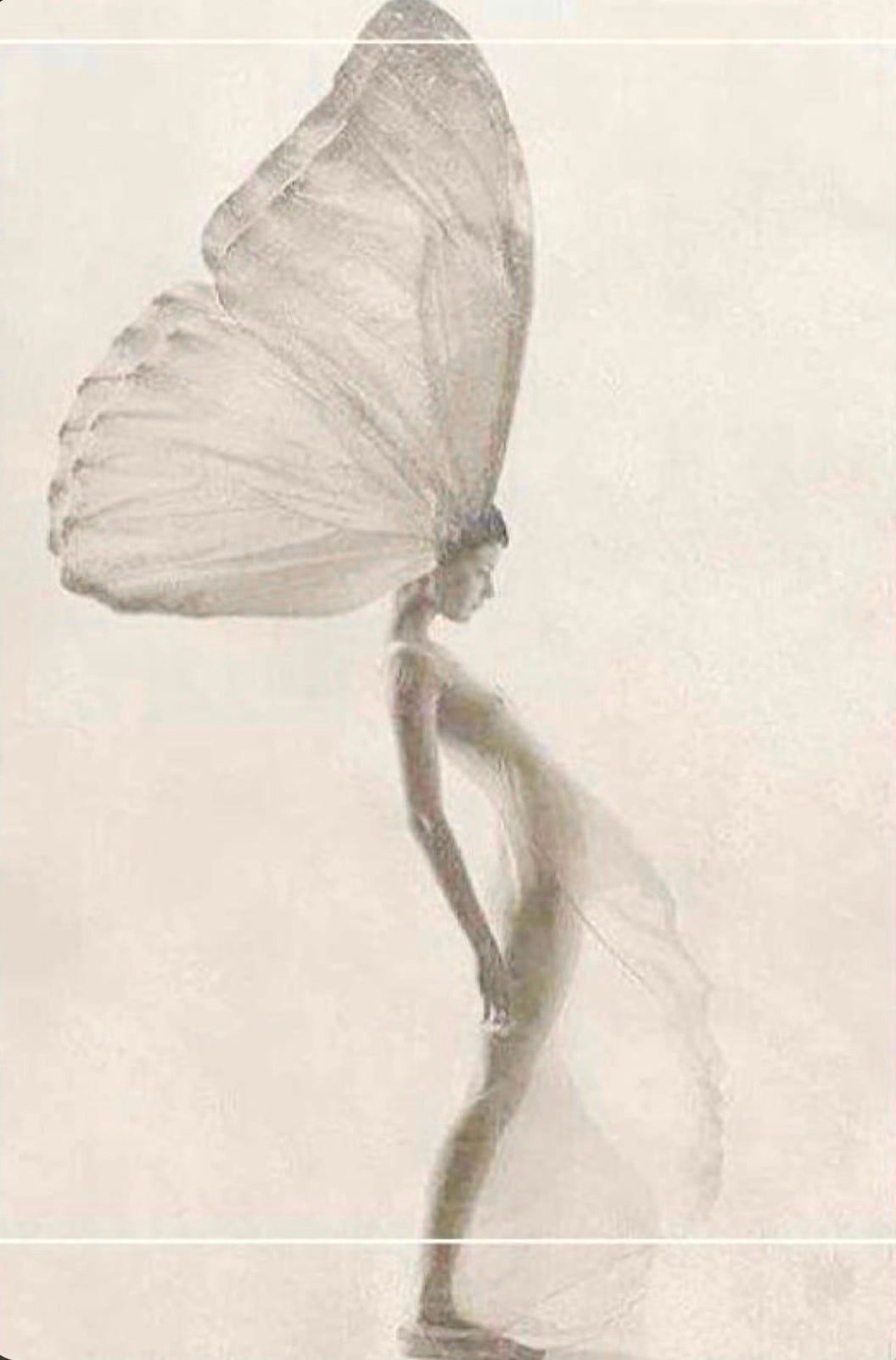
Transformation is quietly profound.
It arrives not always with thunder, sometimes it’s in the hush.
In the bliss of falling in love,
in the winding path of purpose and work,
in the slow healing of a shattered bone or mending of a wounded heart.
And yet, it’s just as potent in the small.
In the moment a boundary is drawn
in the soft reframing of a thought,
in the choosing of kindness when silence might be easier.
Change does not always roar.
Sometimes, it whispers.
I’ve pulled the Transformation card so many times throughout my twenties it feels less like a reading and more like a rerun. A quiet tap on the shoulder from the universe, reminding me that nothing stays the same for long. That message, once a surprise, has become a refrain. I've come to believe that your twenties are not just a chapter of growth but a decade defined by near-constant shapeshifting.
The difference between teenhood and your twenties, at least for me, is this: you go from a life of structure to a life of flux. For well over a decade, your path is paved: school years, semesters, summer breaks, familiar faces, predictable milestones. Then suddenly, you're released into the open air. No roadmap. Just freedom.
And oh, did I run with that freedom.
Ultimate freedom, to me, was choosing where to go or what to do without knowing where I’d land. I used to think living without routine was the key to it all. I found comfort in unplanned days, in waking up and simply seeing where the current would carry me. My life became a spontaneous collection of random jobs, travel, and impulsive decisions. I chased experience like it was currency. I’d jump headfirst into a pool of unlimited options with the trust I’d stumble upon whatever made sense. I didn’t feel like I needed structure because I didn’t think it was conducive to an artist’s lifestyle. I worried it would stifle my creativity. I was content in the looseness, the ever-changing rhythm. I wore change like a second skin.
But I’ve recently realized that the longer I swim in that sea of spontaneity, I’m not floating, I’m drifting. I’ve lost the rhythm I once knew. Without any kind of anchor, the constant change blurs into static—unsettling, relentless, loud. That’s when the anxiety creeps in. Not because I’m moving too fast, but because I haven’t paused long enough to listen. I’ve mistaken motion for meaning. And drifting, without direction, starts to feel less like freedom and more like being lost.
Every version of me in my twenties has felt like a card pulled from the deck. Some by choice, others by force. Some I welcomed. Others arrived like unexpected guests in the middle of the night, demanding my attention.
The College Me was in bloom.
I began shedding layers, testing out new identities like outfits, sometimes literally. There was a sorority era: themed parties, drunken nights, matching T-shirts, and louder laughter. It wasn’t all surface, I found real connection there. Deep friendship and a sense of belonging amidst the shots and dancing. But I also felt myself growing in and out of the roles I tried on. I was learning that I could shape-shift if I wanted to, that I could try on softness, boldness, complexity. I was beginning to see where I fit, and where I was starting to outgrow the stories I once told myself about who I had to be.
Then came study abroad. A different kind of awakening. Over the course of a few months, I traveled to cities across Europe, each one offering a new rhythm, a new lens, a new version of me. I felt the thrill of being untethered, of finding pieces of myself in unexpected places. In art museums, castles, hidden alleyways, and long train rides that blurred into dreamscapes. There was something liberating about being far from everything I knew. In a new country, surrounded by unfamiliar streets, unfamiliar languages, and unfamiliar expectations, I found my voice in a deeper way. I wrote more. I watched more. I listened. I was learning how to move through the world, and how to let the world move through me. In the solitude of wandering, I discovered a quiet confidence: the realization that I didn’t need to be understood immediately to feel at home in myself.
The most transformative part wasn’t the places, it was the people. The people I traveled with became my closest friends, the kind you grow up alongside in a matter of weeks. We saw each other clearly, in ways only possible when you’re far from everything familiar. They are still my best friends.
But it was my time in Rwanda that transformed me most.
I applied to the program without fully knowing what I was signing up for. I saw that it would take me to not only Europe but Africa, a place I never imagined I’d have the chance to see, and that was enough. I said yes out of curiosity, instinct, and the kind of blind faith you only really have in your early twenties.
What we were doing there was called a human-centered design project. We weren’t there to fix anything. We were there to listen. We spent our days sitting with community members, learning how they lived, what they valued, what they actually needed. It was the first time I truly understood what sustainability means—not as a concept, but as a practice rooted in patience and humility. We learned how to offer tools, not handouts. How to support ideas already taking shape. How to ask before assuming. To witness before intervening.
Learning to lead with humility instead of assumption not only reshaped how I view service, but also how I think about storytelling.
Because what struck me just as deeply was how alive art was in the community. In the way stories were passed down. Not on paper or screens, but through song, dance, rhythm, and voice. Art wasn’t separate from daily life. It was embedded in it. It was how people welcomed us in. How history was kept, how joy was celebrated, how pain was made bearable. Storytelling wasn’t something to perfect. It was something to share. Something communal.
I didn’t know it at the time, but those lessons were early seeds for the creative life I’m building now. As a storyteller, I carry them with me: the importance of listening before creating. Of collaboration over control. Of letting the story belong to more than just me.
The version of me who left Rwanda was not the same as the one who arrived. She was intentional. More open. And without realizing it, already becoming the kind of artist she hoped to be.
But maybe the most unexpected transformation came quietly, in the midst of all that becoming. During college, someone close to me died suddenly and tragically. It wasn’t family, but I felt the ripples. It was the first time I saw grief up close. The first time I understood how fast life can fracture. I didn’t know what to do when witnessing that kind of sadness, so I started asking bigger questions about purpose, about energy, about what exists beyond the visible.
That’s when I was gifted my first deck of oracle cards.
I didn’t realize it then, but that moment planted the seed for everything I’m still learning now. The pulling of a card. The reflection it invites. The quiet ritual of asking, and listening. That’s where it all began.
College was the first time I felt my transformation truly taking shape. It was awkward, beautiful, and necessary. It was messy and nonlinear, but something was blooming beneath the surface. I didn’t have the words for it yet. But I could feel it: I was becoming.
The New York Me was bold and burning.
She wore ambition like armor and chased magic in every corner of the city. She learned how to survive alone. She learned how to perform not just in front of a camera, but in life. I remember how deeply I felt things then. How loneliness and exhilaration were often indistinguishable. How every heartbreak cracked something open, whether I wanted it to or not.
I moved to New York on a whim, a decision made in the span of a heartbeat. I didn’t overthink it, I just knew I wanted to be there. To act. To live big. I found a one-bedroom-turned-three, moved in with two girls and a dog, and showed up without a job or a plan. I told myself I’d figure it out when I got there and I did.
I spent my first few weeks canvassing the city with copies of my resume, handing them out to anyone who might be hiring. Eventually, I landed a front desk job at a med-spa. It wasn’t glamorous, but it gave me what I needed: flexible hours, a decent paycheck, and the ability to swap shifts last-minute for auditions, acting classes, or whatever opportunity came calling. My schedule changed every week, and so did I.
New York toughened me in all the right ways. I became scrappy, resourceful, and unapologetic. I learned how to navigate rejection, how to keep going when no one was watching, how to make a home out of chaos. But even in the grit, I never stopped searching for magic. I found it in the theater, in subway performances, in late-night pizza orders and long walks with myself. I was alone a lot, but I wasn’t lonely, not exactly. I was alive. I was becoming someone who could hold both fear and fire in the same breath.
The COVID Me was quieter. Still.
A self shaped by isolation and introspection. The world slowed down, and so did I, though not by choice. The silence forced me to meet parts of myself I’d long ignored. Without auditions to chase or plans to make, I was left with long walks, journal pages, and the eerie echo of my own thoughts. I tried to write. I tried to stay hopeful. But mostly, I just tried to stay afloat.
I moved back home and found myself in my childhood bedroom, surrounded by relics of who I used to be. Old photos, clothes, childhood trophies. It was disorienting, like time had folded in on itself. I was in my twenties, but suddenly I felt sixteen again—adrift, uncertain, and stripped of any illusion of forward momentum.
My rhythm was shaky at best in New York but whatever structure I had disappeared overnight. Days blurred into each other. Nights stretched long and anxious. I felt purposeless in a way I never had before.
And yet, beneath the surface of all that stillness, something subtle was beginning to expand. Without the usual distractions, I had space to feel things fully—for better or worse. I revisited old wounds. I made peace with parts of my past. I began to see how much I’d been running. COVID slowed me down long enough to notice.
That version of me wasn’t productive, or shiny, or impressive. But she was real. She was honest. She planted quiet seeds. Seeds I wouldn’t recognize as growth until much later.
The Los Angeles Me arrived hopeful.
Not quite wide-eyed, but open. Ready for whatever might unfold. I moved across the country and into an Airbnb with a guy I’d met over the summer. We were both from Northern Virginia, both actors, had mutual friends, and he felt safe, like a soft landing in an unfamiliar place. It wasn’t love that brought me there. It was timing. A shared ambition. An agreement to figure things out side by side.
At least this time, I had a job lined up. I worked from 6 a.m. to 2 p.m., which left the rest of the day wide open. Mine to explore, to audition, to write, to wander. I learned to like the structure of those early mornings, the way the light poured through new windows. It gave shape to the uncertainty.
We Airbnb-ed our way through the city, bouncing from one neighborhood to the next to figure out what part to settle in—Hollywood, Culver City, Studio City. Every few weeks felt like a soft reset, a new version of LA to step into. It was chaotic, a little unstable, and exactly what I needed at the time. I was living out of suitcases, improvising routines, trying to plant roots in places that never felt fully mine. But there was something romantic about the transience, even if it wasn’t rooted in romance.
Eventually, I moved into an apartment of my own. It was the first time I had ever lived alone. Just me, my things, my thoughts. At first, it felt stark and a little lonely. But slowly, it became a place of peace. A space that was fully mine. That apartment taught me how to keep myself company.
Later, I moved in with a friend who shared my creative hunger. We spent our days brainstorming, writing, dreaming up stories we wanted to tell and then we actually told one. Together with a group of friends who were just as eager to create, we made a short film. We didn’t wait for permission. We just made it happen. That collaboration became a turning point for me: a reminder that transformation isn’t always internal. Sometimes, it comes from the act of willing something into existence—bringing a story to life that wasn’t there before.
In the midst of this last year of experimentation and self-direction, two significant shifts occurred: I broke my wrist, and I fell in love. The wrist injury was abrupt and disorienting. One moment I was moving through life with momentum, the next I was stuck, slowed down by pain, paperwork, and physical therapy. Navigating the U.S. healthcare system felt like its own kind of injury. I learned quickly that care in this country isn’t always accessible, even when you technically have coverage.
Eventually, I was able to be seen by a fantastic female wrist surgeon. But by then, I’d already been forced to reckon with the fragility of both the body and the systems meant to support it.
The healing process became about more than just the bone. I had to relearn how to move through my days with greater care, patience, and intention. I had to slow down. Ask for help. Let go of the illusion that independence meant doing everything on my own. In that stillness, I gained a deeper understanding of my own resilience—and the limits of constant motion.
Around the same time, I met someone who would change the way I thought about connection. Falling in love during a period of such personal transition added unexpected depth to the journey I was already on. It grounded me in a new way—less about escape or reinvention, more about presence and trust. Love, in this context, was not an escape from transformation but a reflection of it. It asked me to show up fully, to soften in ways I hadn’t allowed myself to before.
Together, these experiences—injury, healing, intimacy, and creative pursuit—helped redefine my trajectory. Producing that short film marked the beginning of a new chapter. I saw how much I enjoyed building something from the ground up, managing the moving parts, and guiding a story into being. I realized that producing wasn’t just a side project; it was a path I wanted to pursue with intention.
Now, I’m still here in Los Angeles.
Still evolving, but more grounded than I’ve ever been.
I’m in a relationship with someone I love. A real, healthy kind of love. One built not on fantasy or drama, but on trust, laughter, and the simple comfort of being seen. His presence feels like home in all the ways that matter. Loving him hasn’t made me lose myself. It’s helped me return to myself. This time I’m more sure of who I am.
And I’m producing. What started as a DIY short film with friends has grown into a calling. One where I feel creatively alive and operationally sharp. I love the challenge of it: the chaos, the puzzle, the problem-solving, the storytelling. I love bringing people together, making something out of nothing, finding clarity in the mess.
This version of me still has questions. Still pulls the Transformation card more often than not. But I don’t resist it anymore. I know now that transformation doesn’t have an endpoint. It’s a practice. A process. A life.
But the question that lingers is: who, or what, are we transforming into? Is it simply an older, wiser version of ourselves? Or are we moving toward something greater, closer to our highest self? The thing about transformation, though, is that it often happens when we’re not paying attention. It’s subtle, like a breeze in the air, a quiet evolution unfolding. And maybe that’s the point. Transformation doesn’t have a final destination. Perhaps this card will keep appearing throughout my life, a gentle reminder that change is an endless dance, a mysterious current that carries us forward.
Who I was in college feels like a distant echo of who I became in New York, and that version of me is almost unrecognizable compared to who I was during COVID. Even a year ago, I felt like someone different—still evolving, but in ways I couldn’t have predicted. And now, I look at who I am today, and I realize how much I've shifted yet again. Each chapter, each phase of life, feels like a different incarnation of myself, as though I’ve worn many identities, only to shed them when the time comes. Who I am now is a result of all those versions, a mosaic of past selves that continue to guide me. But I wonder, as I move forward, what the future versions of me will look back on this moment and see.
Transformation is not a single, sweeping moment, but a series of quiet invitations. Opportunities to listen more closely, live more honestly, love more bravely. And when the next version of me arrives, I hope I’ll recognize her. Not because she looks like who I imagined, but because she’ll feel like home in her own body, in her own rhythm.
And maybe, just maybe she’ll have built a life with a gentle routine.
I’ve come to see routine not as something restrictive, but as a space where change is still allowed to unfold. A rhythm that grounds without gripping. One that holds room for movement, but also for rest. A life where I journal in the mornings, walk when I need clarity, work each day with focus and care, and go to bed early not out of obligation, but out of love for my own well-being. A life that welcomes both structure and surprise, stillness and momentum.
A life that listens for the whisper.
Transformation is quietly profound.
It whispers.
And for now, I’m learning how to listen.
Transformation Affirmation: I welcome this personal transformation with open arms and an open heart.
Mystic Memoirs is an essay experiment inspired by my oracle deck.
I pull the cards not to predict what’s coming, but to anchor myself in what’s already here. Each card offers an idea or theme, and I pay attention to how that idea moves through my life.
The process is simple: draw a card, sit with its message, and let life take its course. I notice what memories surface, what patterns repeat, and what experiences begin to feel charged with meaning. From there, I write. Eventually, an essay-ish thing forms, a small truth. When it’s finished, I publish and pull again.
This is card #2.